The Muse Parlor Folio · The 1940s
Beauty and the War
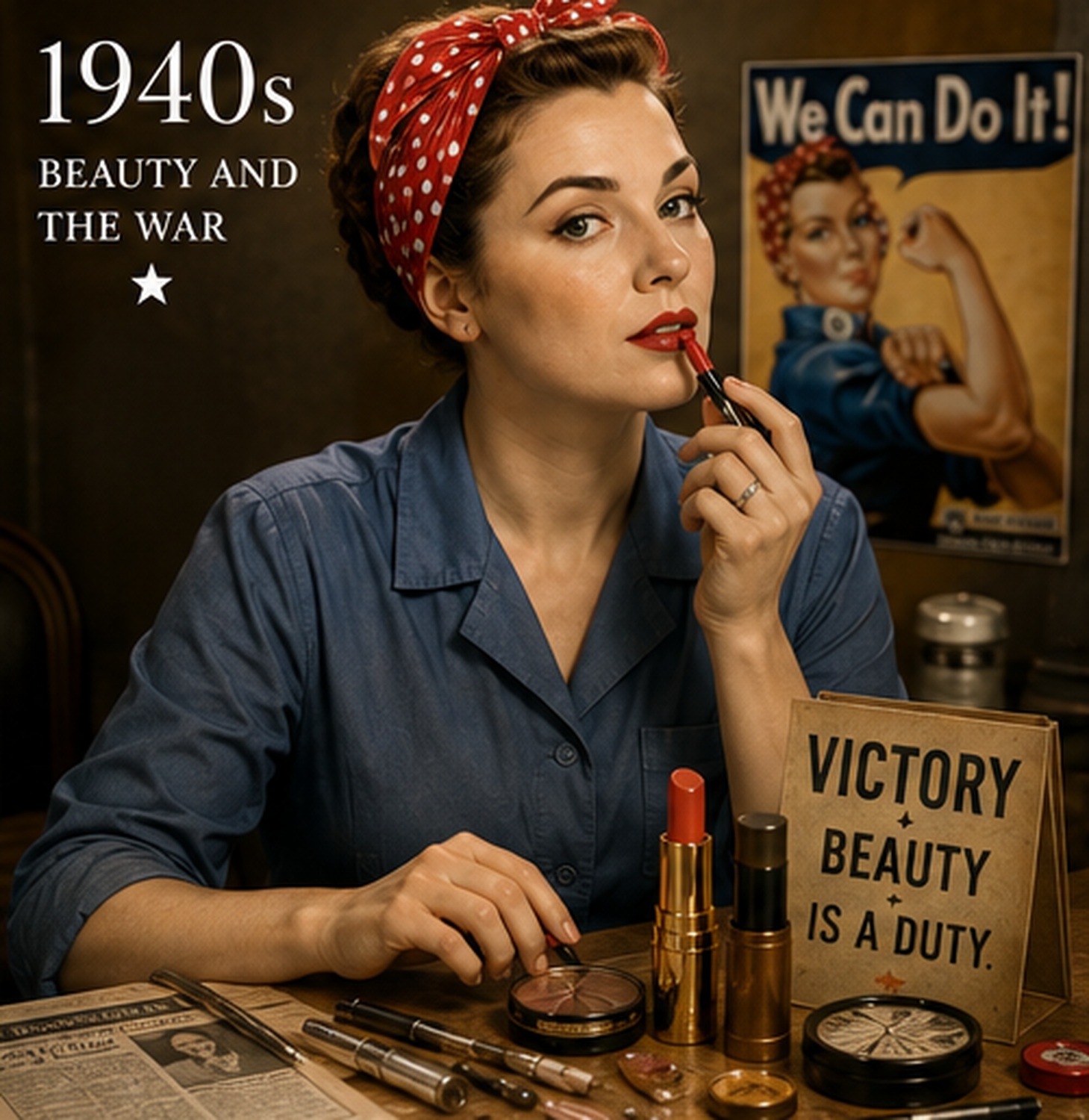
Under rationing, a painted mouth becomes a small act of resolve.
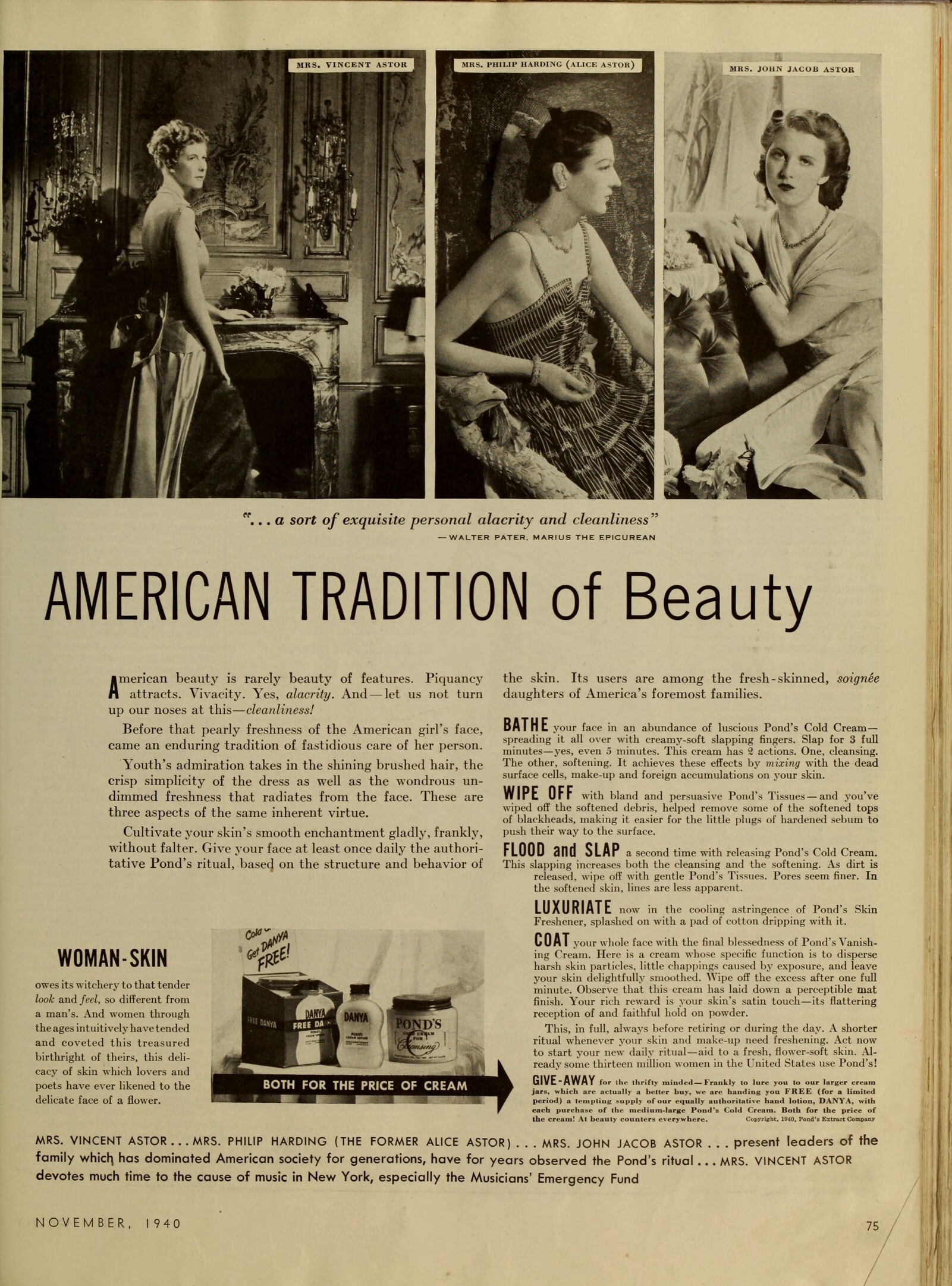
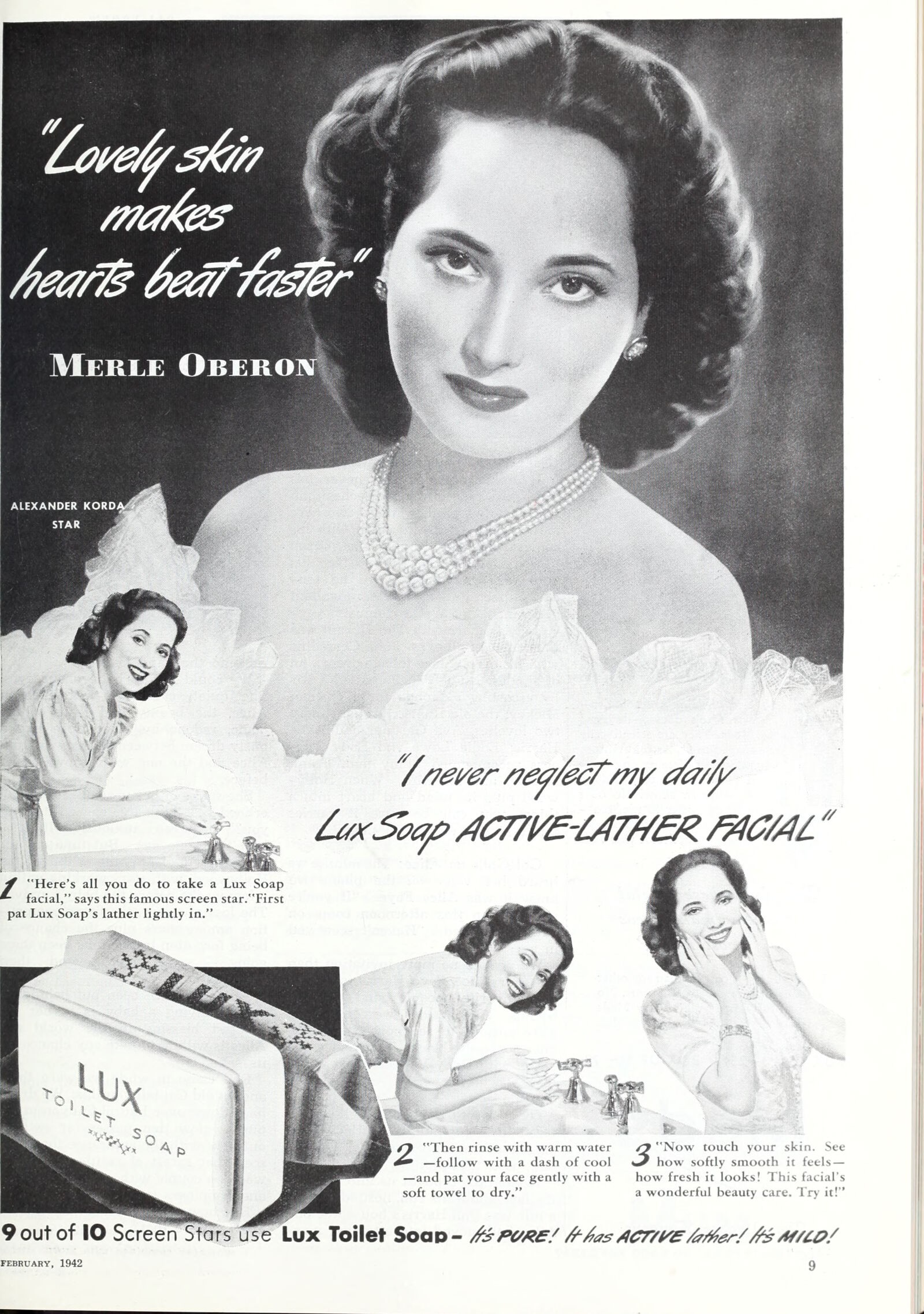
War might have ended beauty advertising. Instead it repurposed it. With cosmetics rationed and the factories full of women, the industry reframed a painted mouth as patriotic duty, and Tangee argued that keeping one's color was a refusal to let the enemy dim the home front.
The audience changed with the message. Jergens spoke to the hands doing war work, and the foundation houses shaped a practical, capable silhouette. Beauty advertising learned, for the first time, to address a woman as a worker and a citizen.
“Color as a small, permitted luxury in an age of restraint.”