The Muse Parlor Folio · The 1930s
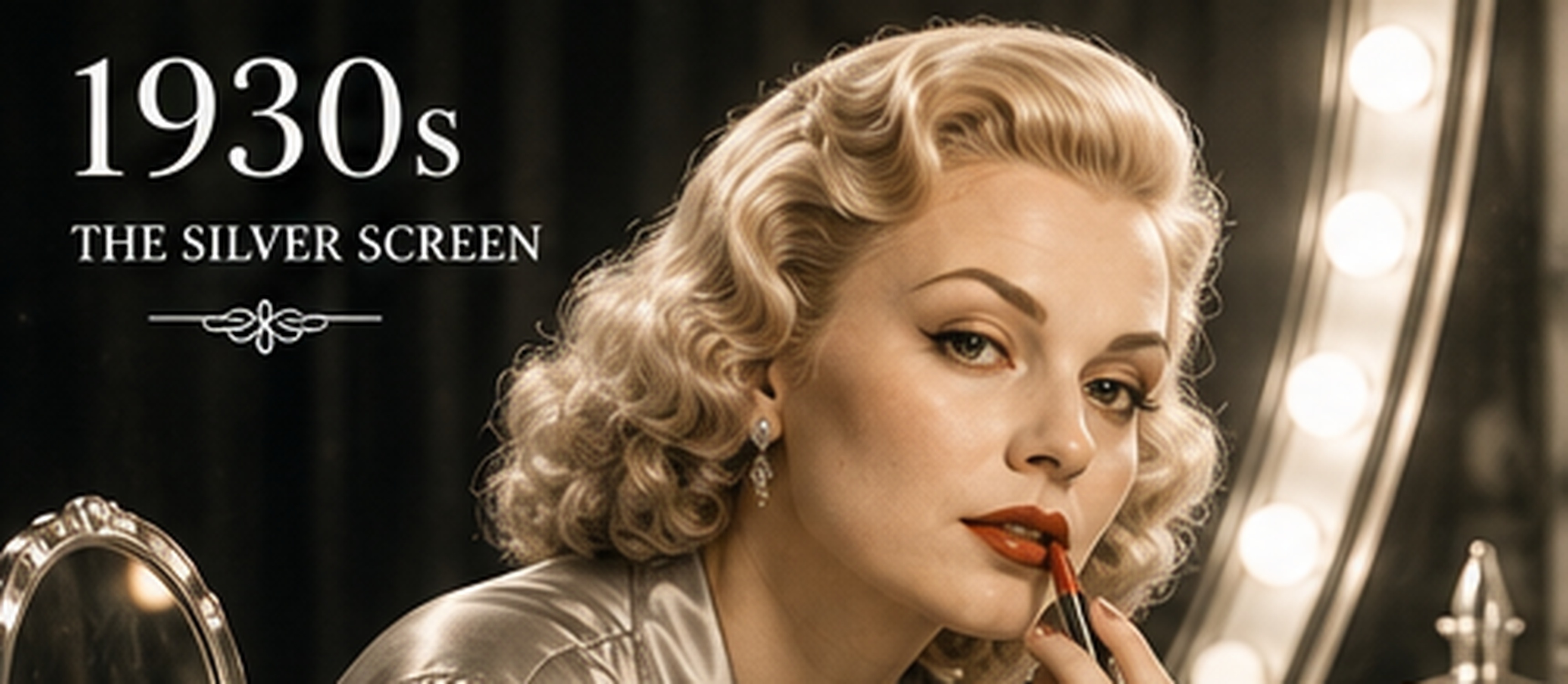
The Silver Screen
Hollywood lends its faces, and the beauty counter becomes a second studio.
The close-up put a complexion on a forty-foot screen, and Technicolor made every flaw a problem to solve, so the studios built a science of make-up to survive it. Max Factor's Pan-Cake was invented for the camera, then sold to the audience that had watched it work.
Lux Toilet Soap signed the contract players and printed the tally, nine out of ten screen stars, so a reader could borrow the glamour of a name she already loved. For two decades, Hollywood is the largest beauty advertisement in the country.
“Max Factor called itself the make-up of the stars, and sold the exact shade worn on set.”